
Knowing how to sell is only half the job. Knowing how to run a neighborhood — when to push, where to pin, what to say when you leave — separates reps from closers.
Your day in the field has three distinct phases. Each has a different energy, a different goal, and a different mindset. Know which period you're in and play it correctly.
The afternoon hours are warm-up time. People are home, the day is early, and your only job is to get your first deal on the board. Don't overthink it — just knock and pitch.
Momentum from Period 1 carries here. You're warmed up, your pitch is tight, and more people are starting to come home. Push further into the hood and capitalize on your social proof.
This is where the top reps separate. Most people quit at 6. The deals close easier at night — families are home together, dinner is done, and the homeowner who said "come back when my spouse is here" is ready. This is The Game.
Leaving the field before 9pm on a weeknight or 8pm on a slow day is almost always a mistake. The rep who stays an extra 90 minutes when they're tired is the rep who finds the deal everyone else missed. The field rewards presence.
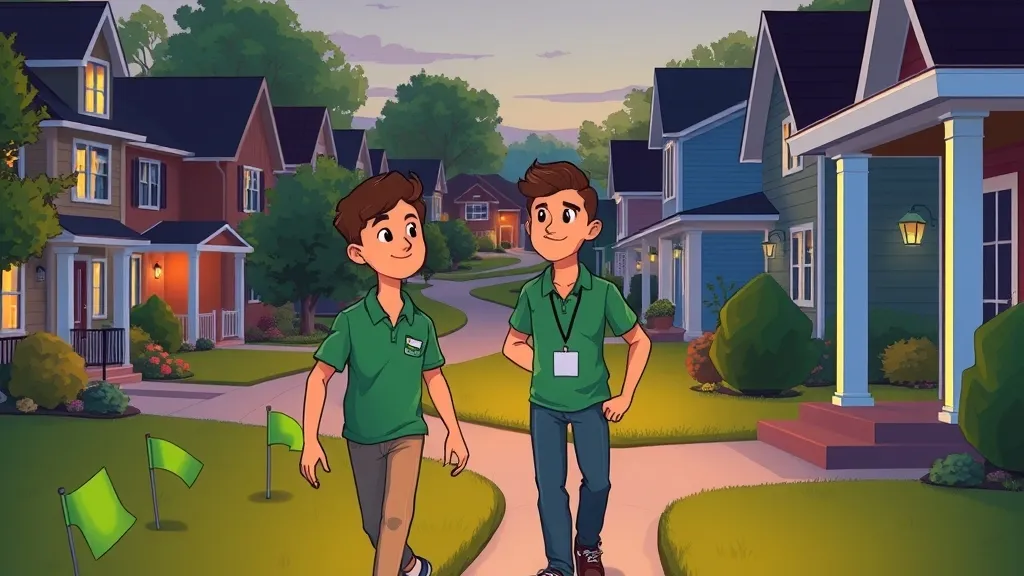
Pins are your map intelligence. Every door you knock gets a color. Over time your map tells you where the deals are, where to send new reps, and where not to waste time.
Knocked, no answer. Come back during a different time window. Grays are not dead — they're deferred.
Homeowner said no firmly or was hostile. Don't re-knock. Note it and move on — energy is finite.
Interested but not home, or asked you to come back. High priority — these are warm leads. Chase them hard in Period 3.
Said no but wasn't firm, or showed interest without committing. Worth a second approach with a different angle.
Aggressively hostile, threatening, or on the company's DNK list. Skip completely and flag for the team.
Deal done. Pin it green, use it as a bandwagon anchor for every door around it. A green is a magnet for more greens.
Cluster your greens. Every closed customer is an excuse to knock the 4 houses around them. "I just finished up at the yellow house — Sarah's place. You can see the sign from here." Route density creates a compounding bandwagon effect that makes the whole street easier.
The close isn't the end — it's the beginning of the customer experience. What you do in the next 8 steps determines whether they cancel, complain, or refer their neighbors.
Walk back through what they're getting — eaves, base, yard, interior, garage — so there are zero surprises at the first visit. Clarity now prevents cancellations later.
iPad out, contract on screen. Don't explain every line — walk them to the signature fields. They agreed verbally; the paperwork is just confirmation.
Card on file or billing info. Handle this naturally — "I'll go ahead and grab your card so we're set for billing" — never make it feel like a separate awkward step.
Give them two windows: morning or afternoon, and let them choose. Getting a date on the calendar anchors the commitment and reduces cancel risk dramatically.
Tell them what the tech will do, how long it takes, and what's normal afterward ("you may see a few bugs surface in the first 48 hours — that means it's working").
"If anything comes back between services, we come back at no charge." Say this clearly and confidently — it removes lingering doubt and re-closes anyone with second thoughts.
"Is there anyone on your street you think would want the same deal?" Do this before you leave — they're still warm. A happy new customer is your best referral source.
End on a high note. The closing speech isn't just a goodbye — it's a final confidence injection that makes them feel great about the decision they just made.
This is the memorized departure script. Every word has a job. It reaffirms the decision, pre-handles buyer's remorse, and leaves the customer feeling good about letting you in. Learn it cold.
The closing speech is memorized for a reason. When you wing it, you either over-explain (reopens objections) or under-deliver (leaves the customer flat). Know it cold, run it the same way every time, and let it work.
The field will hand you excuses every day. Here's how to reframe the hardest field moments so you stay in it when everyone else quits.
Study the Negotiation system — then go run a full night in the field with these tools.